Scam mail detector
Is this letter a scam?
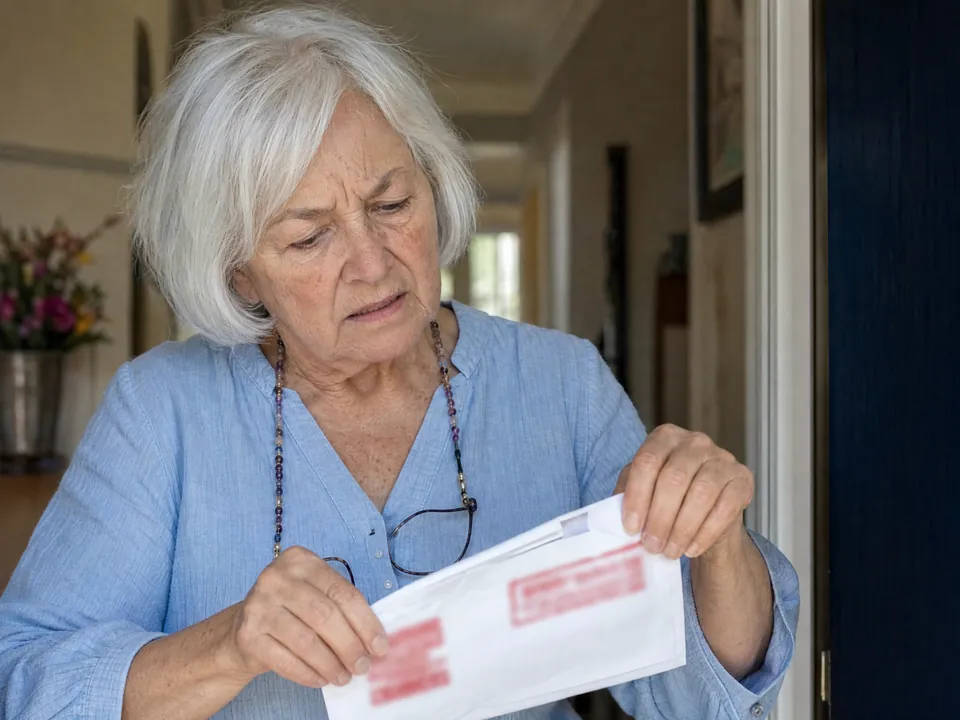
Photograph any letter that worries them. Mimi Care reads it out loud and points out the warning signs (fake Medicare urgency, IRS impersonation, Social Security threats, payment pressure) before they do anything.


We’re welcoming families a few at a time, so there may be a short wait after you sign up.
What it catches
The letters older adults get the most.
Scam mail is made to look like it came from someone they trust. Mimi Care points out the signs a careful reader would notice.
Fake Medicare or Social Security letters.
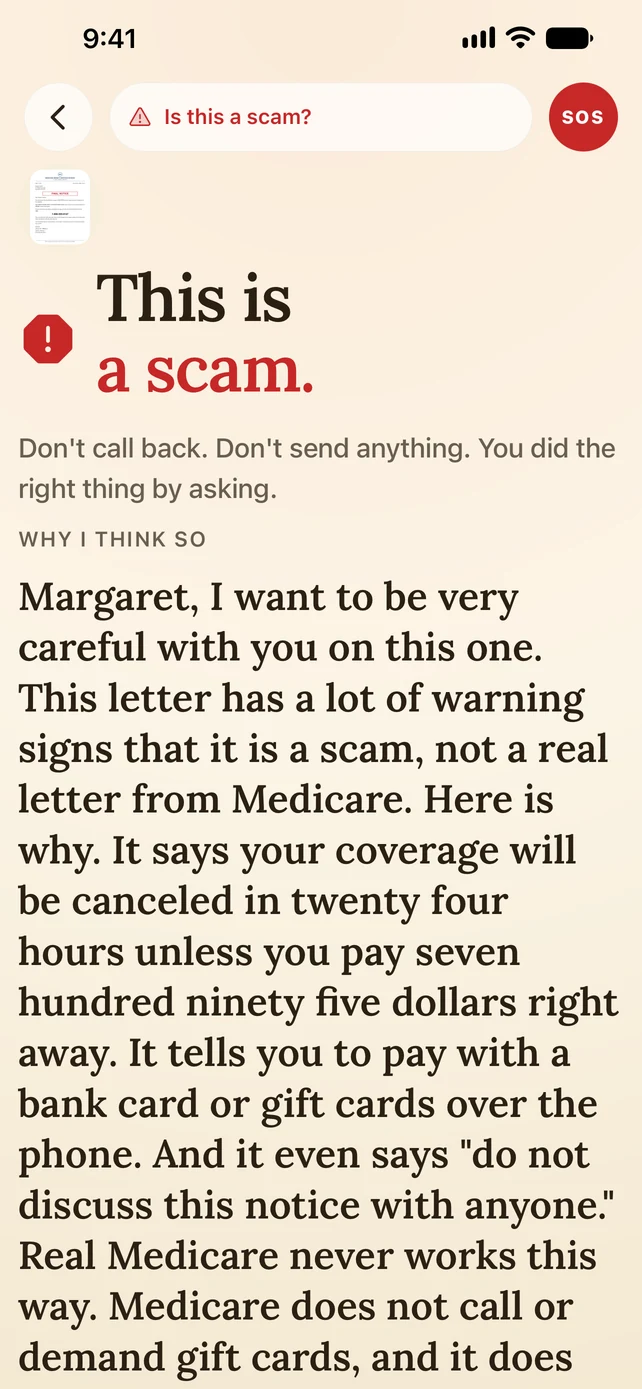
"Call this number within 24 hours." A letter that rushes them to call a phone number is a warning sign. Mimi Care says so, and says why.
Payment demands that smell wrong.
"Send a money order." "Pay with gift cards." "Wire the balance." Those are classic scam signs. Mimi Care calls them out and suggests checking with someone they trust first.
A name they don't know on the envelope.
Mimi Care knows their name, and the names of the people they live with if those were added at setup. If a letter is addressed to someone else, Mimi Care reads the name and asks if they know it: it could be misdelivered mail, identity theft or a scam.
How it works
Three steps.
Built for the person holding the letter.
- 1
Snap a photo.
In Mimi Care, they tap Scam check and take a picture of the letter. Hold it flat; it doesn't need to be perfect. A letter with more than one page gets a picture of each page.
- 2
Hear it explained.
A warm voice describes what the letter looks like and points out anything suspicious, in plain words, at a patient pace.
- 3
Ask anything back.
"Is this really from Medicare?" "Should I call this number?" Mimi Care answers honestly and suggests checking with someone they trust before doing anything.
Why it matters
Fraud against older adults costs billions.
People 60 and older reported losing more than $3.4 billion to fraud in 2023, according to the FBI Internet Crime Complaint Center (IC3) 2023 Elder Fraud Report, and the FBI says many losses are never reported. Scam letters work because they look official: letterhead from an agency that doesn't exist, an official-sounding case number, a deadline that feels real.
Mimi Care doesn't decide for them, but describes what's there (the tone, the pressure, what the letter asks for) and names the parts that match common scams. The decision stays with the person holding the paper; the warning signs just get said out loud.
And if something looks off, Mimi Care doesn't tell them what to do, but suggests checking with someone they trust before doing anything.
Common questions.
What kinds of scam letters does Mimi Care spot?
Fake Medicare and Social Security notices, IRS impersonation, fake lottery and sweepstakes wins, charity scams, fake invoices, and any letter asking for payment by gift card, wire or money order. If a letter pushes them to act right now or to call an unfamiliar number, Mimi Care says so.
Does Mimi Care tell them what to do about the letter?
No, on purpose. Mimi Care describes what's there, including the suspicious parts, and suggests checking with someone they trust. Mimi Care never says "pay this," "sign here" or "call them back."
What if the letter is real and not a scam?
Mimi Care describes a real letter plainly: what it looks like, who it's addressed to, what it says. Only the urgency, impersonation or unusual-payment parts get pointed out.
Does the photo of the letter get saved anywhere?
The photo is sent over an encrypted connection and stored encrypted. Mimi Care's AI provider, Anthropic, reads it to answer. We don't use it to train AI, and Anthropic's terms don't allow it to either. A copy of each help is kept so they can look back at it, and it's deleted after 180 days unless they choose to keep it.
Who finds out that a scam was flagged?
Scam warnings are shared with family unless they turn that off. When Mimi Care flags one and you have scam alerts on, your phone gets a notification that Mimi Care spotted something (it doesn't say what), and it shows in your Inbox. To open the help itself, with the photo and what Mimi Care said, they have to share "What I get help with." Helps are private by default.
Also helpful
- Scam text detectorIs this text a scam? Screenshot it. Mimi Care reads it out loud and points out fake delivery alerts, fake fraud alerts and grandparent scams.Learn more
- Tech helpConfused by a screen? Screenshot it. Mimi Care explains it in plain language and points out tech-support scams.Learn more
Help them stay independent.
Set it up today, on your phone or right here.
Create your accountWe’re welcoming families a few at a time, so there may be a short wait after you sign up.