Scam letters targeting the elderly
The scam letters aimed at your parent.
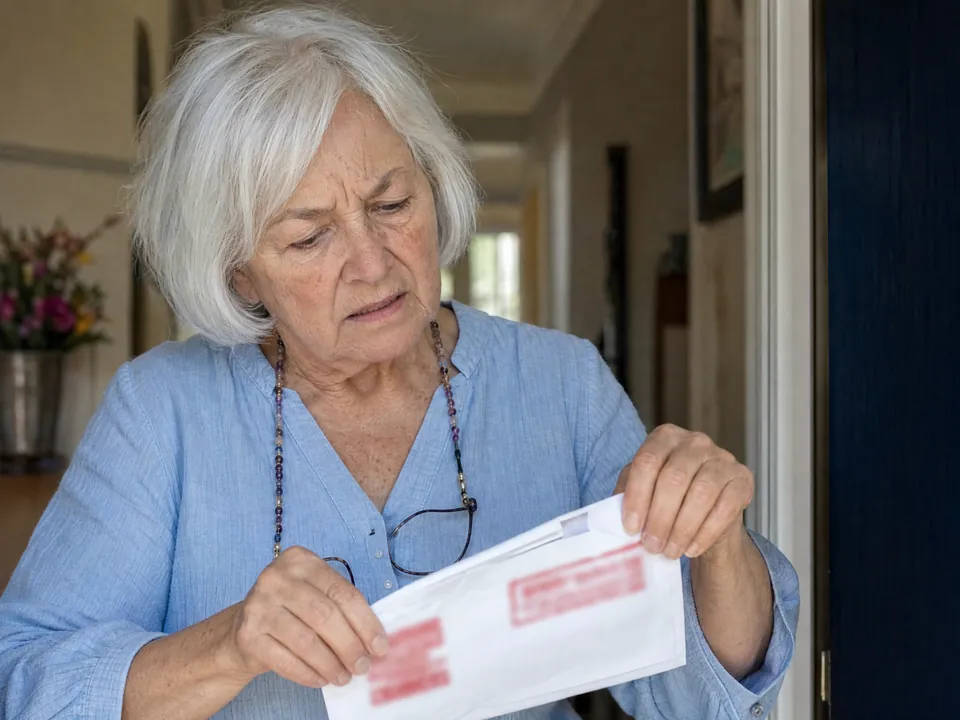
Scam letters aimed at older adults usually follow a pattern: fake Medicare urgency, fake lottery wins, fake overdue bills, fake government threats. Here's what to look for, and how Mimi Care points out the warning signs out loud before they act.


We’re welcoming families a few at a time, so there may be a short wait after you sign up.
The usual suspects
Three scam-letter patterns that target older adults.
Each scam has a script. Mimi Care knows the warning signs.
Fake Medicare and Social Security letters.
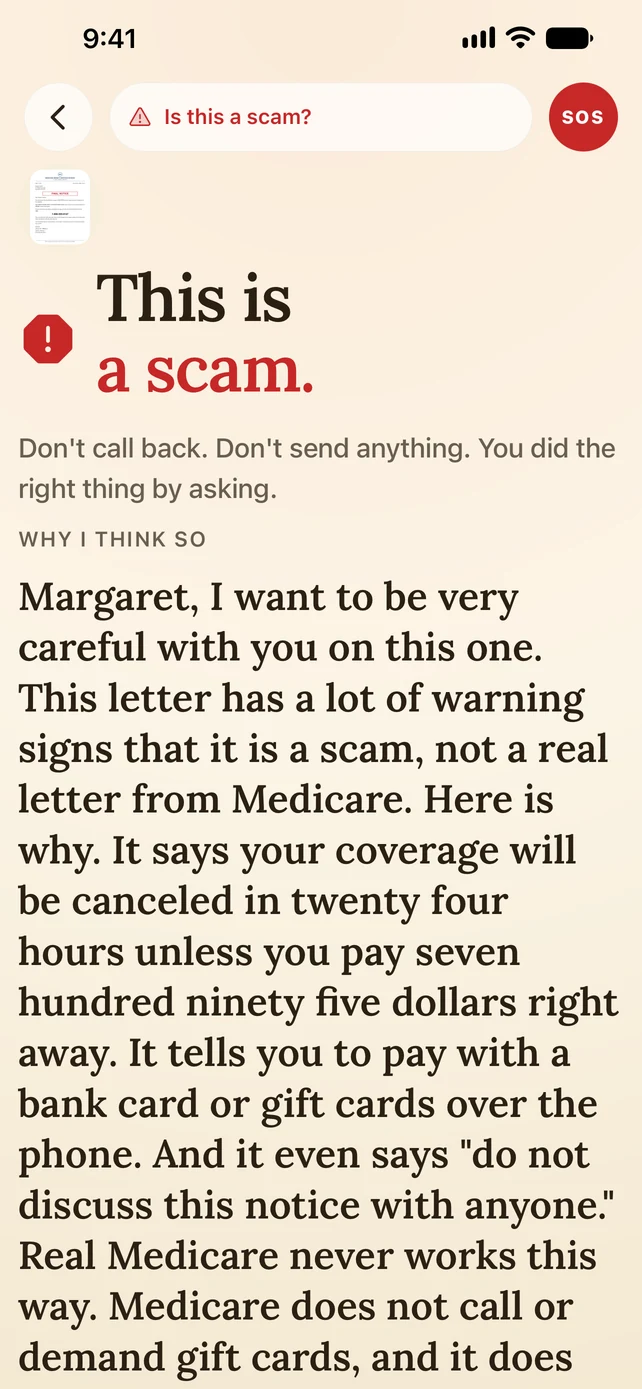
"Your coverage is being suspended. Call within 24 hours." A deadline plus a phone number to call is a warning sign. Mimi Care points it out.
Fake sweepstakes and lottery wins.
"You've won! Send a processing fee to claim your prize." A prize that costs money to claim is a classic scam sign. Mimi Care points out pay-to-claim demands.
Fake government threats.
"IRS: pay this amount or face arrest." A letter that threatens arrest is a warning sign. Mimi Care points out letters pretending to be federal agencies.
How to tell
Three questions Mimi Care asks for your parent.
The questions a careful reader would ask. Mimi Care looks for these on every letter.
- 1
Is there pressure to hurry?
"Act within 24 hours." "Respond immediately." "Final notice." Pressure to act fast is a warning sign, and Mimi Care says so.
- 2
Does the ask look wrong?
Asking for payment by gift card, wire transfer, money order or cryptocurrency is a warning sign. Mimi Care points it out before any money moves.
- 3
Is the name right?
Addressed to someone unfamiliar? It could be misdelivered mail, identity theft or a scam. Mimi Care knows their name, and the names of the people they live with if those were added at setup, and asks about any other name.
Why it matters
A $3.4 billion problem.
People 60 and older reported losing more than $3.4 billion to fraud in 2023, according to the FBI Internet Crime Complaint Center (IC3) 2023 Elder Fraud Report, and the FBI says many losses are never reported. Scam letters work because paper feels official and a deadline feels real.
Mimi Care doesn't decide for your parent, but describes what's there (the tone, the pressure, what the letter asks for) and names the parts that match known scams. The final decision stays with them. What changes is that the warning signs get said out loud, in a patient voice, before they act.
And if they share scam warnings (they do unless they turn that off) and you have scam alerts on, you get a notification when Mimi Care spots something. Not to take over: they hear the warning too. It just gives you a reason to check in.
Common questions.
Which scam letters are common?
Fake Medicare "your coverage is being suspended" letters, fake prize and lottery wins, fake overdue bills and fake government threats. Mimi Care points out the warning signs in each.
Will Mimi Care call the scammer back?
No. Mimi Care explains what the letter looks like and points out the warning signs, but never makes a call, never fills out a form, never takes an action. When a letter looks like a scam, Mimi Care suggests not responding and showing it to someone they trust.
What if it's a borderline case?
When Mimi Care isn't sure, Mimi Care leans toward pointing out the warning signs, and says so. If they hear "this could be a scam, please check with someone you trust," that's the cue to look at it together.
Can I report scam letters to the government?
Yes. The FTC takes scam reports at ReportFraud.ftc.gov. Mimi Care doesn't report scams for them.
Does Mimi Care keep a record of flagged scams?
Each help is kept encrypted for 180 days unless they choose to keep it, so they can look back at it. Helps are private by default. If they share scam warnings, you're told when Mimi Care spots something; if they share "What I get help with," you can open the help, with the letter and what Mimi Care explained.
Also helpful
- Scam mail detectorIs this letter a scam? Snap it. Mimi Care points out fake Medicare urgency and payment pressure before they act.Learn more
- Scam text detectorIs this text a scam? Screenshot it. Mimi Care reads it out loud and points out fake delivery alerts, fake fraud alerts and grandparent scams.Learn more
Help them stay independent.
Set it up today, on your phone or right here.
Create your accountWe’re welcoming families a few at a time, so there may be a short wait after you sign up.